1944 (Unknown Date) — Factory Exploitation
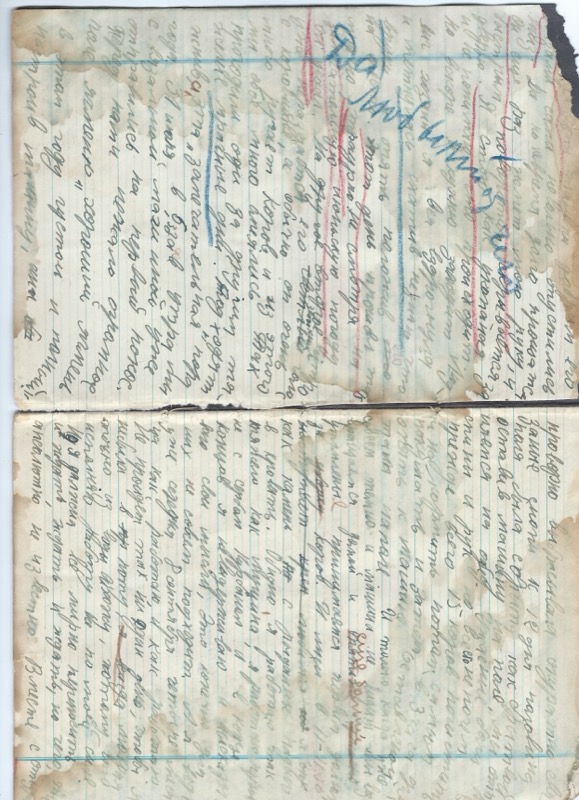
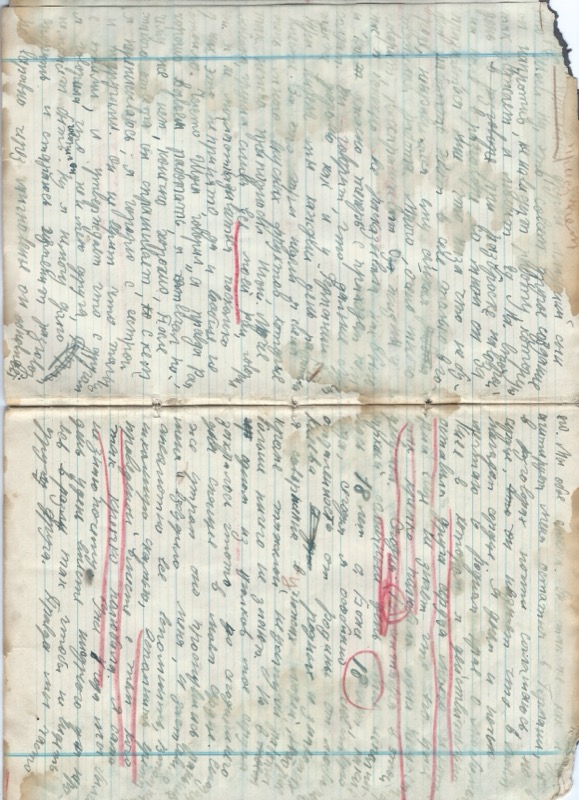
Transcription
Дорогие мои [неразборчиво]!
…работаю [неразборчиво] на фабрике… кормят [неразборчиво] мало… здоровье [неразборчиво] спасибо…
…Италия [неразборчиво]…
…работы… и каждый свободный [неразборчиво]… с фабрики… в Германию… и на бирже нас [неразборчиво]… тяжело…
…нас кормят, и как нас одевают… получаем… кушать…
…фабрику… эксплуатируют… рабочих…
…за день мы работаем… Здесь нас кормят… суп водяной… хлеба… картошку…
Context
This diary fragment provides a stark contrast to Raisa’s earlier farm experiences. Written during her factory period (likely 1943-1944), it documents harsh industrial conditions with remarkable directness.
Factory Conditions Documented:
- Food rationing: “кормят мало” (they feed us little), “суп водяной” (watery soup)
- Labor exploitation: “эксплуатируют рабочих” — remarkably direct political language
- Work intensity: References to daily work schedules and “каждый свободный” (every free [moment])
- “На бирже” — processed through the Arbeitsamt (labor exchange)
Historical Context:
- Italy mentioned: Possibly news of Italian surrender (September 1943) or Italian campaign
- This represents the shift from agricultural to industrial Ostarbeit — many workers were transferred to factories as Germany’s labor needs intensified
Comparison to Farm Work: Unlike her earlier letters from the Schönaich farm (where she praised the food and treatment), factory conditions were harsh. This aligns with her earlier observation that factory work was “ужас, дикий ужас” (horror, wild horror).
Document Condition: These pages are severely damaged with tears, stains, and water damage. The deteriorating conditions may reflect both physical circumstances and the chaotic final period of the war.
Political Awareness: The direct statement about exploitation shows Raisa’s growing political consciousness — or perhaps greater willingness to document harsh truths as the war’s end approached.
Source: SCAN0157–SCAN0158 (Diary notebook №2)