Unknown Date — Ludwig Hunts at Dawn, Seeds for Home
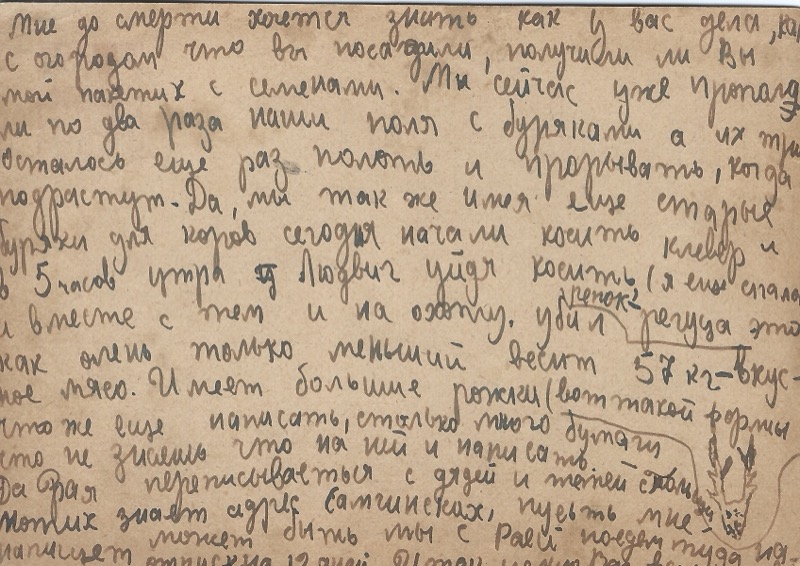
Transcription
Мне до смерти хочется знать как у вас дела, как с огородом что вы посадили, получили ли вы мой пакетик с семенами. Мы сейчас уже пропололи по два раза наши поля с буряками а их три осталось еще раз полоть и прорывать, когда подрастут. Да, мы так же имея еще старые бурьки для коров сегодня начали косить клевер и в 5 часов утра и Людвиг ушёл косить а ещё спала и вместе с тем и на охоту, убил [неразборчиво] регула это как олень только меньший весит 57 кг - вкусное мясо. И меет большие рожки. Да Рая переписывается с дядей и тётей [неразборчиво] может знает адрес Салинских, пусть мне — может быть ты с Раей поедет туда на напишет отпуска 12 дней…
Context
This letter fragment reveals intimate details of farm life and the German host family’s activities:
Ludwig the Farmer: We meet Ludwig, the German farmer, who starts work at 5am mowing clover and combines it with hunting. He killed a roe deer weighing 57 kg (“like a deer but smaller”) with “big antlers” and “delicious meat.” This shows the host family’s access to fresh meat during wartime rationing.
Agricultural Work: Raisa describes detailed field work — they’ve weeded the three beet fields twice, with one more weeding to come. They still have old beets for cattle feed. The precision of agricultural descriptions shows her deep involvement in farm operations.
Connection with Home: She sent seeds home to her family’s garden and is “dying to know” about their harvest. This touching detail shows how she tried to help feed her family even from Germany, sharing agricultural resources.
Social Network: References to Raya (another Ostarbeiter) who corresponds with relatives and might know the Salinski address. Someone is getting a 12-day leave — either home leave or work furlough, though details are unclear.
Timing Context: The agricultural cycle (clover cutting, beet weeding) suggests summer 1942 or 1943. The detailed knowledge of farm operations and comfortable tone about Ludwig’s activities suggests this is from her farm period at Schönaich, not the later factory period in Hannover.
Personal Touch: The phrase “мне до смерти хочется знать” (I’m dying to know) reveals how desperate she was for news from home about their survival and garden.
Source: SCAN0050