May 5, 1943 — Wage Increase to 35 Marks
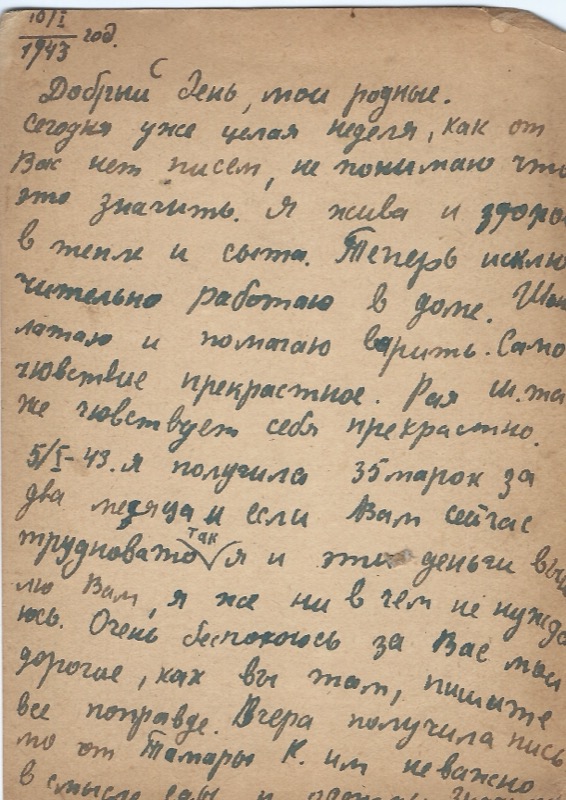
Transcription
10/I 1943 год. Добрый день, мои родные. Сегодня уже целая неделя, как от Вас нет писем, не понимаю что это значить. Я жива и здорова, в тепле и сыта. Теперь исключительно работаю в доме. Шью, латаю и помогаю варить. Самочувствие прекрасное. Раз М. тоже не чувствует себя прекрасно.
5/5-43. я получила 35 марок за две недели и если Вам сейчас трудновато так и эти деньги вышлю Вам, я ни в чем не нуждаюсь. Очень беспокоюсь за Вас мои дорогие, как вы там, пишите все поправде. Вчера получила письмо от Тамары К. им неважно [неразборчиво] в смысле себя…
Context
This letter reveals a significant improvement in Raisa’s working conditions and pay by May 1943:
Wage Increase: Her pay doubled from 17 marks/month (September 1942) to 35 marks per two weeks — now earning approximately 70 marks/month. This substantial increase suggests either her skills were highly valued or general wage adjustments for Ostarbeiter.
Work Changes: She now works “exclusively in the house” doing domestic tasks — sewing, mending, and helping with cooking. This is a major shift from the earlier outdoor farm work (mowing clover, weeding beets, harvesting). The indoor work may reflect seasonal changes or her proven skills.
Financial Generosity: Despite being a forced laborer, she offers to send money home: “If things are hard for you, I’ll send this money too — I need nothing.” This remarkable generosity shows both her privileged position on the farm and her deep love for family.
Family Concerns: She senses her family is hiding hardships: “Write everything truthfully” (“пишите все поправде”). After a week without letters, she’s worried. Her request for honesty suggests she knows occupied Ukraine’s conditions are deteriorating.
Health Notes: Raya M. (her fellow Ostarbeiter) “doesn’t feel wonderful,” while Raisa feels “прекрасное” (wonderful/excellent). The contrast suggests varying conditions among workers.
Network: Letter from Tamara K. indicates she maintains contact with friends, though their situation is “not good.”
Historical Context: May 1943 was after Stalingrad (February 1943) but before Kursk (July 1943) — the war’s momentum was shifting, possibly affecting labor policies and wages to maintain productivity.
This letter shows Raisa at her most prosperous during captivity — well-paid domestic work, good health, and able to offer financial help to her struggling family in occupied Ukraine.
Source: SCAN0063