Post-War — Mother and Son
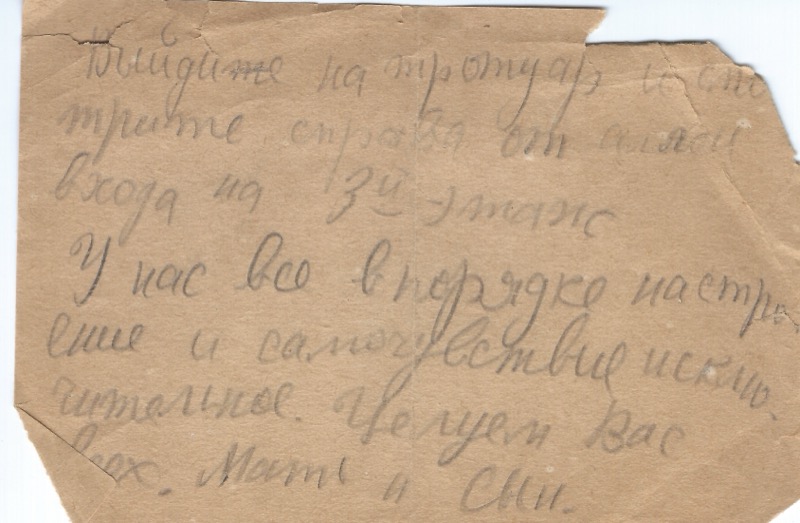
Transcription
…выйдите на тротуар то смотрите, справа от входа на 3ч — этаже. У нас всё в порядке настроение ещё и самочувствие искреннее нормальное. Целуем вас всех. Мать и Сын.
Context
This brief fragment stands apart from all other correspondence in several crucial ways:
Physical Characteristics:
- Brown kraft paper instead of wartime German letter paper
- Pencil instead of blue ink
- Torn condition suggesting rough handling or poor storage
Content Differences:
- No elaborate greeting — brief, matter-of-fact tone
- Giving directions to a building: “3rd floor, right of entrance”
- “Mother and Son” signature — completely different from Raisa’s usual signatures
Historical Context: This appears to be from the post-war period (1945-1946+) based on:
- Different materials available after war
- Practical content — helping someone find their new address
- Changed circumstances — no longer writing elaborate letters
Possible Scenarios:
- Post-repatriation: Raisa and family member writing to relatives about their new Soviet housing
- Displaced persons period: Writing from DP camp or temporary housing
- Resettlement: Directions to new apartment assignment after return
Personal Significance: The phrase “настроение ещё и самочувствие искреннее нормальное” (mood and health are genuinely normal) suggests they felt the need to reassure recipients about their psychological and physical condition — understandable after years of forced labor.
Family Structure: The “Mother and Son” signature raises questions about family composition post-war. This could be:
- Raisa and a younger brother (Grisha/Motik?)
- Raisa’s mother and Raisa
- Different family members entirely
This fragment provides a glimpse into the post-war period that’s rarely documented in the archive — the practical, brief communications of survivors rebuilding their lives.
Source: SCAN0051